
Who Are the Yorùbás?
A Brief History of One of Africa’s Most Influential Civilisations The Yorùbá are one of the most prominent, culturally rich, and historically signific...
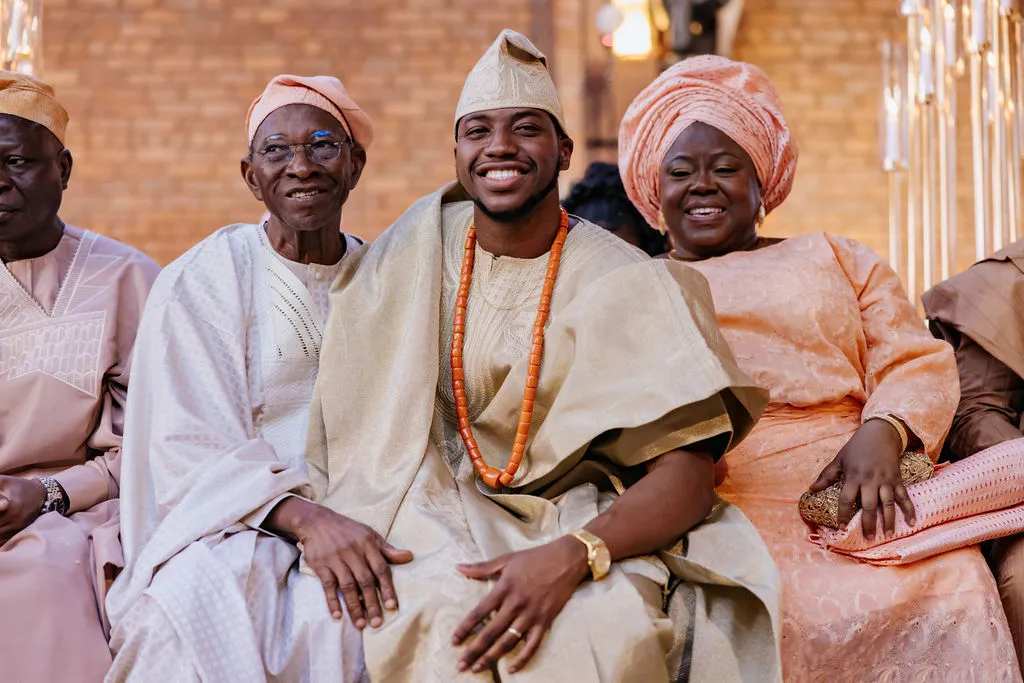
A Brief History of One of Africa’s Most Influential Civilisations
The Yorùbá are one of the most prominent, culturally rich, and historically significant ethnic groups in Africa. While primarily concentrated across southwestern Nigeria and parts of Benin and Togo, their profound influence is felt globally, stretching across a vast diaspora that includes the Americas and the Caribbean. This widespread scattering resulted from powerful historical factors, primarily the devastating Atlantic slave trade. Geographically, this diaspora reaches across the African continent, from Senegal to the Nile, and spans both North and South America.
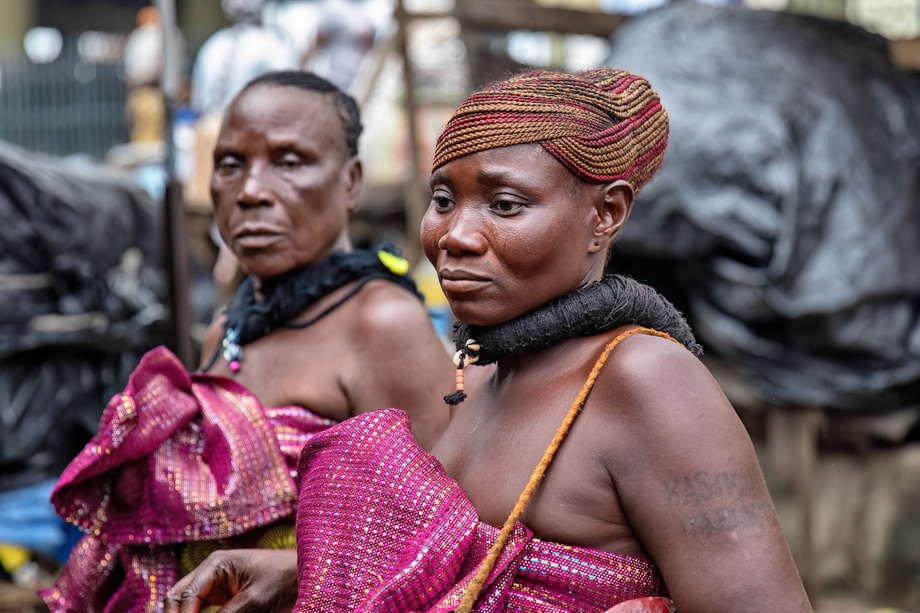
Historically, the Yorùbá and people who share Yorùbá heritage often identify themselves by specific regional or subgroup names, such as Ọyọ or Èkìtì, regardless of what country or region they find themselves in. However, the primary factor that unifies this globally diverse population and serves as the clearest evidence of their shared heritage is their language, which encompasses a variety of distinct dialects, a common cosmology, and deeply shared cultural practices. Their vibrant culture, complex spiritual system, and sophisticated pre-colonial political structures have cemented their influence on the African continent and beyond.
The Yorùbá Language, Origin and Myths
The Yorùbá language belongs to the Niger-Congo family, and is tonal, where pitch can change the meaning of words. Beyond communication, the language carries centuries of oral traditions and spiritual knowledge, preserving the collective memory of the people.
The Yorùbá culture is rich in creation myths and cosmology. One central narrative tells of the sky deity Olorun giving Orisas a chain, some earth in a snail shell, and a five-toed chicken, instructing them to descend and build the land. Oduduwa (Odua) played a pivotal role in shaping the earth, and many Yorùbá trace their lineage to him.
While myths situate the Yorùbá in a divine realm, archaeological evidence shows that the people likely emerged from the older Volta-Niger population over centuries. By the 1st millennium CE, Yorùbá communities were already practising agriculture, trade, and social stratification. Ile-Ife, considered the spiritual and cultural home of the Yorùbá, flourished as an artistic and religious centre between the 13th and 15th centuries.
Historical Development and Kingdoms
Compared to many contemporary societies in Europe and elsewhere during the medieval and early modern periods, Yorùbá civilisation demonstrated an astonishing level of urbanisation and political complexity.
Compared to other civilisations at the time, Yorùbá city-states demonstrated advanced urban planning, metallurgy, and artistic sophistication. Their bronze sculptures and terracotta works predated European exposure to similar levels of naturalism, while political systems emphasised checks and balances, diplomacy, and inter-kingdom trade networks. Long before European colonisation, Yorùbá kingdoms influenced neighbouring regions through commerce, military alliances, and cultural exchange, shaping the political and social landscape of West Africa.
The arrival of European powers and the Atlantic slave trade imposed new pressures, disrupting trade networks and social structures. Yet the achievements of Yorùbá kingdoms—especially in governance, art, commerce, and religion—left enduring legacies that continue to inspire scholars and artists today.
Major Kingdoms and Their Influence Before Colonisation
While all Yorùbá city-states traced their sacred origin to Ìlé-Ifẹ̀ (the spiritual and cultural home), two major political entities dominated and projected Yorùbá influence across West Africa:
-
Ìlé-Ifẹ̀ (The Cradle): Flourishing between the 13th and 15th centuries, Ìlé-Ifẹ̀'s primary influence was cultural and artistic. Its exquisite, naturalistic bronze and terracotta sculptures became the standard for royal art across Yorùbáland and beyond, inspiring the bronze-casting traditions of the neighbouring Benin Kingdom. Ifẹ̀ was the source of sacred kingship, providing the cultural template for all other Yorùbá Ọbas.
-
The Ọyọ Empire (The Hegemon): Dominant between the 17th and 19th centuries, Ọyọ was primarily a military and diplomatic power. Extending Yorùbá influence across present-day Nigeria, Benin, and Togo, it controlled vast trade networks between the forest and the savannah, becoming rich from the trade in kola nuts, cloth, and, tragically, slaves. Ọyọ's powerful cavalry was instrumental in enforcing its tributary relationships with smaller kingdoms and cementing its status as one of West Africa’s largest pre-colonial empires.
-
Other Major Kingdoms: Kingdoms like Ìjẹ̀bú (renowned for its massive Eredo fortifications and coastal trade), the powerful confederacy of the Ègbá (centred at Abeokuta), and the independent kingdoms of Òndó and Èkìtì further demonstrate the depth and variety of Yorùbá governance. These kingdoms were not lesser entities but rather fully independent players in a complex political landscape.
The Yorùbá participated in both regional and global trade long before the British takeover. Lagos (Èkó), an Awori Yorùbá fishing settlement, was a functioning commercial hub with a local economy that predated European arrival.
-
The Pioneer European Traders: The Portuguese were the first Europeans to establish contact and trade along the West African coast in the 15th century. They named the settlement Lagos (meaning "lakes"). Trade with Yorùbá ports, initially in goods like pepper, cloth, and ivory, gradually shifted to the devastating traffic in enslaved people, especially after the 17th century.
-
Trade and Art: Yorùbá artistic production, particularly the masterful bronzes of Ifẹ̀ and the textiles of Ìjẹ̀bú, flowed into global trade networks. More profoundly, the devastation of the Atlantic slave trade involuntarily transplanted millions of Yorùbá people to the Americas. In Brazil, Cuba, Haiti, and elsewhere, their traditional Òrìṣà religion, language fragments, and musical traditions were not extinguished but instead fused with local and Catholic practices, giving rise to powerful new Afro-Atlantic religions like Santería and Candomblé. This cultural resilience and spiritual legacy became the single greatest global influence of the Yorùbá civilisation, continuing to shape music, art, and identity across the Western Hemisphere to this day.
Compared to other civilisations at the time, Yorùbá city-states demonstrated advanced urban planning, metallurgy, and artistic sophistication. Their bronze sculptures and terracotta works predated European exposure to similar levels of naturalism, while political systems emphasised checks and balances, diplomacy, and inter-kingdom trade networks. Long before European colonisation, Yorùbá kingdoms influenced neighbouring regions through commerce, military alliances, and cultural exchange, shaping the political and social landscape of West Africa.
The arrival of European powers and the Atlantic slave trade imposed new pressures, disrupting trade networks and social structures. Yet the achievements of Yorùbá kingdoms—especially in governance, art, commerce, and religion—left enduring legacies that continue to inspire scholars and artists today.
Religion
The spiritual core of Yorùbá identity is Ìṣẹ̀ṣe (literally, "The Original Tradition" or "Source of Practice"). This term itself implies a complete spiritual way of life and a cosmological worldview that integrates every aspect of existence, rather than a doctrine separated from daily living.
The traditional Yorùbá worldview encompasses a complex structure of existence and morality. At the apex is Olódùmarè or Eledumare, the Supreme Creator, who is remote and generally not directly worshipped. Below Eledumare are the Òrìṣàs (deities), amongst whom are previous humans elevated to divine status that personify natural elements and human endeavours, such as Ògún (god of iron and creativity) and Ọ̀ṣun (goddess of rivers, beauty, and fertility).
Central to all spiritual life is Àṣẹ (Ase), the divine life force, power, and authority that permeates all things. The goal of life is to align one's character (Ìwà) and destiny (Orí) through good works and wisdom. Ifá divination is the elaborate system used by priests (Babaláwos) to consult the wisdom of the Òrìṣàs, guiding ethical decisions, healing, and life path fulfilment. This deep, living connection to the spiritual realm, alongside ancestor veneration (Ẹ̀gúngún), forms the bedrock of communal and individual morality.
Yorùbá spirituality is characterized by its adaptability. Over time, many Yorùbá people adopted Islam or Christianity, often blending these faiths with traditional principles. This syncretism allowed the new religions to be interpreted through the Yorùbá worldview, enabling the maintenance of deep-seated cultural continuity even amidst religious change.
During the Atlantic slave trade, many Yorùbá people were taken forcibly to the Americas. In the diaspora, Yorùbá religious ideas, music, language, and customs were fiercely maintained and merged with local traditions, forming vibrant syncretic systems such as Candomblé in Brazil and Santería in Cuba.
Colonialism and Post-Colonial Period
The transition from the pre-colonial era dramatically reshaped the Yorùbá world. In the 19th and early 20th centuries, British colonial expansion absorbed the many independent Yorùbá states into protectorates, fundamentally altering traditional governance structures and introducing new social and economic norms.
The historical fragmentation of the Yorùbá people is a direct consequence of colonial partitioning, which split a single ethno-linguistic group across multiple modern states and Nigerian administrative regions. The unity of the Yorùbá cultural area, known as Yorùbáland (Ilẹ̀ Káàárọ̀-Oòjíire), was severely disrupted by European powers during the late 19th and early 20th centuries.
The most significant break occurred with the establishment of the inter-colonial boundary between the British, who claimed Nigeria, and the French, who claimed Dahomey (now Benin) and parts of Togo. This arbitrary demarcation, often drawn in European capitals with little regard for pre-existing socio-political entities, physically divided Yorùbá kingdoms, communities, and families.
Today, substantial indigenous Yorùbá populations reside in adjacent countries. In the Republic of Benin, Yorùbá speakers (often referred to as Nago or Anago) constitute a large minority, primarily in the central and southern departments like Ouémé and Plateau. In Togo, smaller, scattered Yorùbá communities are concentrated in central and northern regions, sometimes near the border with Benin.
This boundary forced millions of Yorùbá to become citizens of different nations, subject to different legal systems, colonial languages (English vs. French), and educational models, yet retaining shared cultural roots and kinship ties across borders.
Even within Nigeria, the Yorùbá population is not strictly confined to the Southwest. The redrawing of regional and state borders by colonial and post-colonial governments created further fragmentation:
-
North-Central States: Significant Yorùbá communities exist in Niger, Kogi, and Kwara, historically part of the Northern Region of Nigeria.
-
Kwara State: The Yorùbá are the dominant ethnic group in the southern and central areas, including the capital, Ilorin.
-
Kogi State: Yorùbá-speaking groups here, collectively known as the Okun people (including Owé, Ìyàgbà, and Bùnú subgroups), make up around 20% of the state population and often feel politically marginalised.
Smaller Yorùbá-speaking enclaves also exist outside the Southwest, such as among the Itsekiri people in Delta State and parts of Edo State, demonstrating the wide geographic spread of the civilisation. In these states, Yorùbá groups often operate as political minorities in a multi-ethnic context.
This historical and administrative partitioning demonstrates why the term “Yorùbá” refers to a cohesive cultural and linguistic group rather than a unified political or territorial entity defined by modern political maps.
Arts, Philosophy and Culture
The Yorùbá are globally renowned for their artistic traditions, but their culture extends far beyond visual expression. It is deeply intertwined with philosophy, ethics, and social norms, making it a holistic system in which art, spirituality, and everyday life reinforce one another.
At the core of Yorùbá philosophy is the concept of Omolúabi, a moral ideal representing a person of integrity, responsibility, and good character. Omolúabi embodies virtues such as honesty, respect, courage, and communal responsibility, and it serves as a guiding principle for individual conduct, governance, and social interactions.
Artistically, Ìlé-Ifẹ̀ achieved fame for naturalistic bronze and terracotta sculptures, astonishing early European observers with their technical sophistication. Beyond this ancient heritage, the arts remain vital: metal casting, intricate wood carving (used for masks, statues, and doors), textile weaving (aso-oke), beadwork, and mask-making are celebrated crafts that continue to influence African and global art movements.
In contemporary Nigeria, Yorùbá communities continue to shape art, politics, culture, and economics. Lagos, the economic centre of Yorùbaland, has grown into one of Africa’s largest megacities. Institutions like the John Randle Centre for Yoruba Culture & History in Lagos work to preserve and celebrate Yorùbá heritage in the modern era.
Despite modern pressures, Yorùbá civilisation remains vibrant, with young scholars, artists, and communities actively reclaiming, reinterpreting, and renewing their heritage. through music (Afrobeat, juju, modern pop), film (Nollywood), literature, fashion, and visual art.
References
ATS Coalition. (n.d.). Yoruba Cosmology & History. Retrieved October 2025, from https://www.atscoalition.org/yoruba-cosmology-history?utm_source=chatgpt.com
Bowen, T. J. (n.d.). Grammar and Dictionary of the Yoruba Language: With an Introductory …. Retrieved October 2025, from https://books.google.co.uk/books?id=v3pEAAAAcAAJ
Britannica. (n.d.). Yoruba | History, Language & Religion. Retrieved October 2025, from https://www.britannica.com/topic/Yoruba
EveryCulture. (n.d.). Yoruba people. Retrieved October 2025, from https://www.everyculture.com/wc/Mauritania-to-Nigeria/Yoruba.html
Heard Museum. (n.d.). Yoruba Art and Culture / Teaching Kit. Retrieved October 2025, from https://hearstmuseum.berkeley.edu/wp-content/uploads/TeachingKit_YorubaArtAndCulture.pdf
ehrafworldcultures.yale.edu. (n.d.). Yoruba culture overview. Retrieved October 2025, from https://ehrafworldcultures.yale.edu/cultures/ff62/summary
africa.si.edu. (n.d.). Yoruba Art and Spirituality. Retrieved October 2025, from https://africa.si.edu/exhibits/olowe/yoruba/yoruba.htm
Oxford Bibliographies. (n.d.). Yoruba Diaspora. Retrieved October 2025, from https://www.oxfordbibliographies.com/abstract/document/obo-9780199846733/obo-9780199846733-0226.xml
Lumen Learning. (n.d.). The Yoruba States. Retrieved October 2025, from https://courses.lumenlearning.com/suny-hccc-worldcivilization/chapter/the-yoruba-states/
obtlab.climate.columbia.edu. (n.d.). Yoruba historical research paper. Retrieved October 2025, from https://obtlab.climate.columbia.edu/sites/default/files/content/Publications%20%28PDFs%29/JAA_Review.pdf
theologiaviatorum.org. (n.d.). Yoruba historical and religious perspectives. Retrieved October 2025, from https://theologiaviatorum.org/index.php/tv/article/view/77/202
Cambridge University Press & Assessment. (n.d.). Yoruba research publication. Retrieved October 2025, from https://www.cambridge.org/core/journals/africa/article/abs
Wikipedia. (n.d.). Yoruba people. Retrieved October 2025, from https://en.wikipedia.org/wiki/Yoruba_people
Wikipedia. (n.d.). History of the Yoruba people. Retrieved October 2025, from https://en.wikipedia.org/wiki/History_of_the_Yoruba_people
Wikipedia. (n.d.). Yoruba religion. Retrieved October 2025, from https://en.wikipedia.org/wiki/Yoruba_religion
Meta-Wiki. (n.d.). Yoruba oral tradition. Retrieved October 2025, from https://meta.wikimedia.org/wiki/Yoruba_Oral_Tradition_Project
Tomedes. (n.d.). Yoruba language. Retrieved October 2025, from https://www.tomedes.com/translation/blog/yoruba-language
The Guardian. (2024, April 30). John Randle Centre for Yoruba Culture & History. Retrieved October 2025, from https://www.theguardian.com/global-development/2024/apr/30/john-randle-centre-yoruba-culture-lagos-nigeria
Comments